


I've always liked Drumeo videos. My favorites are the ones where a drummer who usually lives in one genre gets dropped into a completely different world. One of the first I remember seeing was Ulysses Owens Jr. playing a Nirvana track. The video was titled, "Juilliard jazz professor hears Nirvana for the first time."
Ulysses is a colleague of mine and a phenomenal drummer. When I saw that video, I was shocked that he had never even heard the song ‘In Bloom’ by Nirvana. But a few months ago, I sat with him in his Broadway drum booth while he was playing What a Wonderful World on Broadway. I asked him about it, and he told me flat out: "Nope. Never heard it." After talking with him about it and hearing his story, I believe him.
He was born in 1982, which would've made him about nine when that album dropped. If you spend your life immersed in jazz, funk, gospel, or R&B, it's easy to miss entire movements of music. As a kid and teenager, you mostly listen to whatever your family and friends are into. There's so much music out there that it's natural to go deep in one lane without crossing into another.
My path was different. At home, I was surrounded by music. My parents filled the house with '60s and '70s soul. My sisters and cousins played Elton John, Kiss, Journey, Led Zeppelin, and Prince. My cousin introduced me to Aerosmith and Led Zeppelin. Pretty soon, I found my own thing. I got hooked on P-Funk, Cameo, Slave, The Time—the groove-driven funk that shaped the late 70s and early 80s.
Then rap exploded in 1979, and I was in it from the ground floor. Kurtis Blow, The Fat Boys, The Cold Crush Brothers, The Crash Crew, Grandmaster Flash and the Furious Five, Run-DMC—that whole first wave hit me like a lightning bolt. Later, it was Rakim, Big Daddy Kane, and De La Soul. That energy was raw, creative, and impossible to ignore. By the early 80s, hip-hop was just as much a part of me as funk.
When I went off to college, I dug into jazz on my own terms. Howard University's library had an incredible record collection, and I'd spend hours there listening to Miles Davis, John Coltrane, Art Blakey, Horace Silver, Sonny Rollins, Wayne Shorter—the masters. And when I discovered Tony Williams, it completely changed my perspective on the drums.
After college, I jumped into the DC record store scene. I started at The Wiz in Georgetown in 1989, moved to Kemp Mill Records in Dupont Circle in 1990, and by 1992, I was managing Record Town downtown—right before I moved to New York City.
Those years were an education all by themselves. Every week, new releases from every corner of music hit the shelves. And it wasn’t just quantity—it was quality. Seal’s debut album. Bob Marley’s Legend. Lenny Kravitz’s first record. A Tribe Called Quest’s Low End Theory. Soundgarden’s Badmotorfinger. The Chili Peppers’ Blood Sugar Sex Magik. Public Enemy’s Fear of a Black Planet. Pearl Jam’s Ten. And of course, Metallica’s Black Album. Say what you want about their catalog, but for me, that record still stands as their best-sounding one.
Working in those stores, I didn’t just hear the music—I absorbed it.
At the same time, I was playing in every kind of band I could find—blues gigs in D.C. with Daryl Davis that eventually put me on stage with Chuck Berry, singer-songwriter sets, jazz gigs, and my own rock/metal band, EvilTwins, modeled after Soundgarden and the other heavy bands of that era. In 1998, we even opened for Creed.
That mix of influences, including funk, rap, jazz, blues, rock, and metal, gave me a toolkit that I still carry with me today.
But like Ulysses, there were still blind spots. Gospel was one of them. Outside of knowing "Oh Happy Day," I really didn't know the genre. In 2016, I began playing Christian Contemporary Music at a church in the Upper West Side YMCA, and I often wondered why this genre wasn't considered "gospel." Over time, I realized that a line had been drawn between the two: "white gospel" was rebranded as CCM, while "black gospel" maintained its own lane. It was musical segregation, plain and simple. A shame, because I came to like both.
That curiosity eventually led me to a true deep dive into gospel when I had to prepare for The Gospel at Colonus and play drums behind the legendary Kim Burrell. That research took me back to Thomas A. Dorsey, Sister Rosetta Tharpe, The Caravans, The Dixie Hummingbirds, Mahalia Jackson, James Cleveland, and forward up through the Hawkins Family. And the more I listened, the clearer it became — all of it connects back to the blues.
By the time I hit Broadway, I had a complete toolkit: funk, soul, jazz, rap, rock, metal, reggae, blues. And that toolkit is exactly why I was able to thrive. When I played Memphis the Musical, David Bryan (from Bon Jovi) would toss out references from the 1950s, 1960s, or 1970s, and I knew them cold. Because I wasn't just reading notes on a page, I had lived the music. That shared vocabulary brought the score to life. It's one of the reasons Memphis wound up being a Tony-winning show.
That’s why those Drumeo videos are so much fun. You’re watching a top-level player walk into a song they don’t really know, break it down, and rebuild it using their own vocabulary. Sometimes it’s messy, sometimes it’s brilliant, but it always shows their instincts in real time.
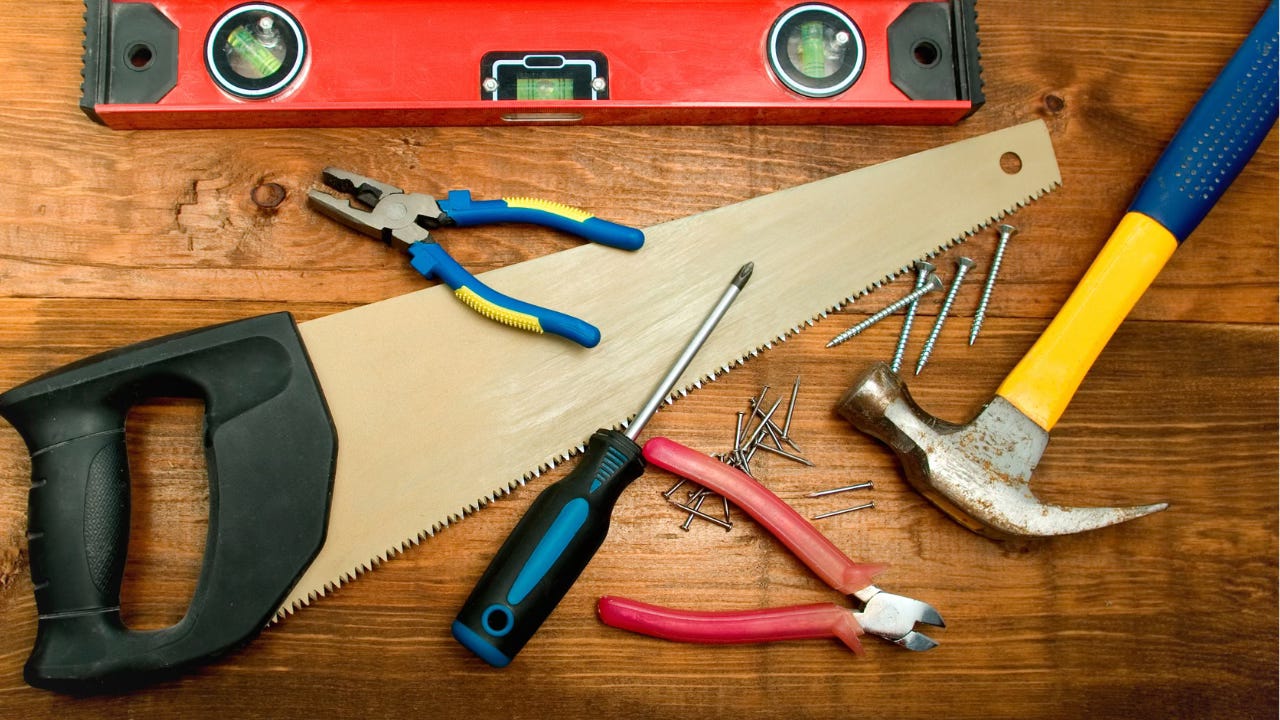
Being a musician is like being a builder. If all you’ve got is a screwdriver and a wrench, you can put something together—but it probably won’t hold. Add a hammer, a saw, a drill, and a level, and now you can make something strong, flexible, and built to last. With the right tools and the right materials, you can create almost anything.
Music works the same way. If all you know is musical theater, you’ll get by. But if you’ve lived inside jazz, funk, R&B, gospel, rock, hip-hop, metal, and blues, you’ve got a full toolbox. And with that, you can walk into almost any situation and build something that stands the test of time.
That's why I love these videos. They prove that the more styles you know, the more depth and creativity you bring to any situation. On Broadway, that's not optional. It's survival.
Let me know which Drumeo videos are your favorites and share them in the comments below:
It's the equivalent of "unlikely animal friends." Sometimes there is fun, beauty and warmth when two unlikely forces intersect. Should be more of it.