


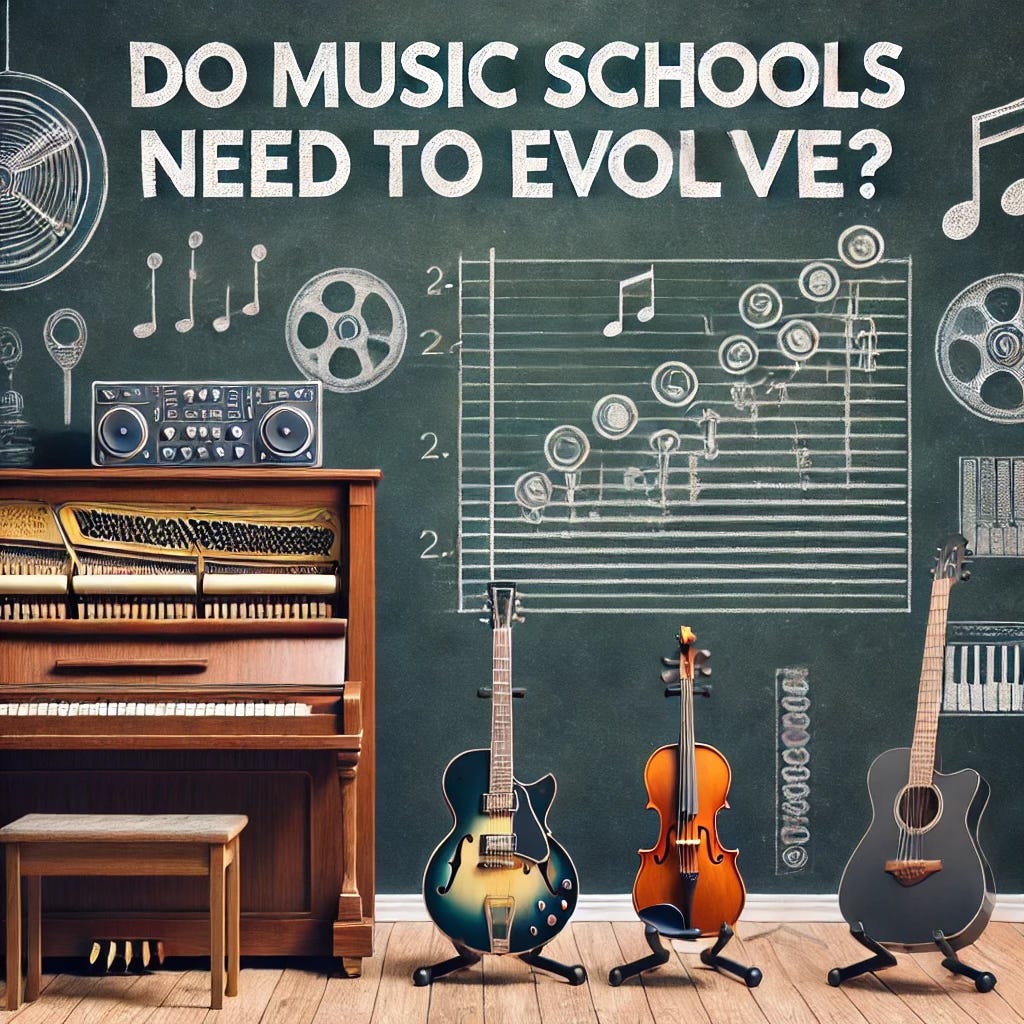
I've been having intense discussions with friends lately about what music schools teach students and whether these institutions prepare them for the real world of music. There's no doubt that a deep understanding of music theory, history, composition, arrangement, harmonic analysis, counterpoint, and other aspects of music is important and can be useful. But when it comes to actually playing music for different people, it's all about the emotions it evokes and how it makes them feel.
Think about it: When the average listener puts on a record, what are they tuning into? It's not the intricate analysis of the harmonic structure or the clever use of counterpoint. They're responding to how the music sounds to them, how it hits them on a visceral level.
For instance, when people say they love Kind of Blue by Miles Davis, we may ask them what they like about it. Their answers rarely touch on the musical theory behind it; instead, they will most likely describe the experience in physical and emotional terms. Why? It’s because the average person doesn't analyze music the way a trained musician might—they feel it.
This difference in perception highlights a gap between what music schools emphasize and what might actually be helpful in the real world. In a lot of ways, classical music finds itself in a similar situation as jazz. Both genres often face scrutiny for whether they're new or innovative enough. But at the end of the day, there are only so many notes to play. The question shouldn't be, "Is it new?" but rather, "Is it good?"
Sometimes, I have issues with how most music schools seem to focus predominantly on jazz and classical music. Some, like Berklee, have branched out to include classic rock or other modern music studies, but there's still a disproportionate emphasis on music that's over 50 years old. Disco and dance music, for example, started about 50 years ago in the clubs of NYC and other metropolitan areas, and dance music is arguably more popular today than jazz. If schools are going to continue teaching jazz and touting its complexity and greatness, why not give the same respect to the great danceable and funk tunes from the late '60s and '70s? And let's not forget what those genres evolved into—hip hop, a revolutionary genre that has dominated popular music for over 40 years.
The professional work you'll likely find after music school is more rooted in music created post-1969 rather than the older "museum music" that schools often emphasize. Why the continued focus on the past? We already have museums honoring the masters of yesteryear, including Rock and Roll and Hip Hop Halls of Fame. If jazz is truly about pushing boundaries and innovating with every performance, why do schools of higher learning take such a conservative approach? They should be more progressive, teaching students to break new ground using today's modern tools. And sorry to all the purists, but you can't un-invent things. AI is here to stay, just like electric guitars in the '50s, distorted amps in the '60s, jazz/rock bands in the '70s, hip hop in the '80s, and digital audio workstations in the '90s. There's no going back, so why stay stuck in the past?
These questions are not just about the past but about the future of music education. What did you find useful about attending music school? If you didn't study jazz studies or performance, why not? How valuable is it to stick to genres of music that are no longer as popular? Since you're reading this and interested in Broadway, why didn't you study the music that forms the backdrop of most of today's musicals? There's arguably more pop than jazz or classical compositions being made for shows today. How do we reconcile the fact that, eventually, you'll have to leave Kind of Blue behind and embrace the sounds that are shaping the current musical landscape?
I'd love to hear your thoughts.
Clayton Craddock is the founder of Broadway Drumming 101, a comprehensive online platform dedicated to providing specialized mentorship and a meticulously curated collection of resources.
Clayton’s Broadway and Off-Broadway credits include: tick, tick...BOOM!, Altar Boyz, Memphis The Musical, Lady Day At Emerson's Bar and Grill, and Ain't Too Proud - The Life And Times Of The Temptations, Cats: The Jellicle Ball and The Hippest Trip: The Soul Train Musical. He has subbed for shows like Motown, Evita, Cats, Avenue Q, The Color Purple, Rent, Spongebob Squarepants - The Musical, Hadestown (tour), and many more. Clayton has appeared on The View, Good Morning America, Jimmy Fallon, The Today Show, the TONY Awards, and performed with legends like The Stylistics, The Delfonics, Mario Cantone, Laura Benanti, Kristin Chenoweth, Kerry Butler, Christian Boyle, Norm Lewis, Denise Williams, Chuck Berry, and Ben E. King.
Clayton is a proud endorser of Ahead Drum Cases, Paiste Cymbals, Innovative Percussion drumsticks, and Empire Ears.
For more about Clayton Craddock, click here: www.claytoncraddock.com
CONNECT WITH ME ON MEETHOOK
I don't think it's a matter of leaving something behind. Classics are so named and revered because the truths they express are timeless. One of those truths is that its expression will and does take different/new forms, to which people should remain open.